



How to Choose the Right Work Boots for Every Job
Key Takeaways
- Understand the specific hazards of your work environment to select appropriate safety features.
- Ensure boots meet relevant safety standards and certifications.
- Prioritize comfort and proper fit to prevent fatigue and injuries.
- Consider material durability and maintenance requirements.
- Evaluate sole design and traction based on workplace conditions.
Table of Contents
- Assess Workplace Hazards
- Understand Safety Standards and Certifications
- Prioritize Comfort and Fit
- Choose Durable Materials
- Evaluate Sole Design and Traction
- Consider Waterproofing and Insulation
- Break In New Boots Properly
- Maintain Your Boots for Longevity
Finding the right work boots is essential for protecting yourself on the job while remaining comfortable throughout long workdays. With so many features and brands available, narrowing down the ideal pair can seem overwhelming. The right choice will depend on your work environment and daily tasks. For those in Toronto or similar environments, you can explore the full range of safety boots Toronto to help you get started.
A quality pair of boots should not only meet regulatory requirements but also withstand the physical demands of your workplace. Choosing wisely can prevent both minor discomfort and more serious workplace injuries. By understanding the key features to look for, you can avoid common pitfalls and invest in footwear that truly supports you each day. Carefully consider factors like durability, certifications, and the specific hazards you encounter in your field to narrow down your best options.
From complying with safety standards to ensuring your boots are properly broken in, taking a thoughtful approach is often required in the long run. Employers often require compliance. Pay attention to details such as sole design and proper maintenance to keep your boots in good condition for years to come. Taking the time to make an informed decision will help you stay productive, safe, and comfortable, no matter what job you do.
Assess Workplace Hazards
The first step in choosing the right work boots is to identify the specific risks you face at your worksite. For example, those handling heavy equipment or materials will need to protect against falling objects and may benefit from steel or composite toe caps. If you regularly work with electrical systems, boots with Electrical Hazard (EH) ratings are crucial. In environments with wet or oily floors, slip-resistant soles decrease the risk of dangerous falls. Construction sites often require puncture-resistant soles to prevent injuries from stepping on sharp objects. Carefully reviewing your worksite hazards helps you select boots that provide the most appropriate protection.
Understand Safety Standards and Certifications
Meeting established safety standards is just as important as comfort. Look for boots that comply with recognized benchmarks such as ASTM F2413-18, which covers toe cap impact and compression resistance. For electrical protection, verify that footwear is marked EH. Compliance is often required by employers and could be a legal necessity in certain industries. Failing to wear certified footwear can leave you exposed during accidents and may even invalidate workers’ compensation claims. For further reading on workplace safety standards, the Occupational Safety and Health Administration (OSHA) provides comprehensive guides on PPE requirements.
Prioritize Comfort and Fit
Since you may spend eight hours or more in your boots every day, comfort is critical. Start by making sure your boots fit snugly but not tightly. Always try on work boots in the afternoon, as feet tend to be slightly larger after a day’s activity. Proper arch support and cushioning help reduce fatigue and minimize the chances of long-term foot problems. Opt for breathable materials, such as genuine leather, to manage moisture and keep your feet comfortable. Remember, poorly fitting boots are one of the leading causes of blisters and chronic foot pain in physically demanding jobs.
Choose Durable Materials
The quality and durability of your work boot materials determine not only longevity but also overall protection. Full-grain leather is valued for its toughness and breathability, making it a reliable choice for many trades. Synthetic materials are sometimes lighter yet may not last as long under rough conditions. Consider what your specific job requires from your footwear before deciding. External factors, such as exposure to chemicals, mud, or water, can also guide you toward the best material for both durability and safety.
Evaluate Sole Design and Traction
The design and grip of the sole are crucial for stability and slip prevention. Wedge soles distribute weight evenly and are ideal for those working on smooth, flat surfaces such as warehouse floors. For outdoor or uneven job sites, consider boots with heel soles for additional grip and stability. Deep lug soles offer superior traction in wet, snowy, or muddy conditions and are a must-have for outdoor workers. Choosing a sole that matches your working environment can significantly cut the risk of slips and falls. The National Institute for Occupational Safety and Health provides research and safety guidance on footwear for various workplaces.
Consider Waterproofing and Insulation
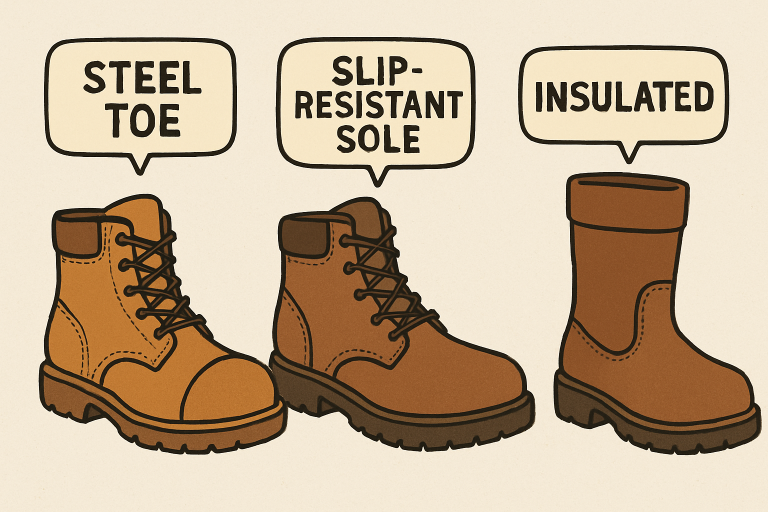
Work conditions can vary drastically between wet, cold, and hot environments. Waterproof boots are essential for keeping your feet dry and healthy when working around water, helping to stave off conditions like trench foot. However, waterproof liners can also cause sweaty feet in hot environments, so evaluate your climate before choosing. In cold regions, insulated boots provide necessary warmth. When working in heat, unlined leather boots allow for greater breathability and comfort. Always tailor your choice of waterproofing and insulation to your work conditions and personal needs.
Break In New Boots Properly
Brand-new work boots often need a break-in period. Wearing them gradually allows the material to mold to your foot shape and prevents blisters. Start by using your boots for short periods before transitioning to full workdays. Softening the leather with conditioners and gently flexing the soles can also help speed up the break-in process. A patient approach ensures your boots feel comfortable during long shifts and maintains the structural integrity of the materials.
Maintain Your Boots for Longevity
Regular maintenance is key for extending the useful life of your work boots. Clean your boots after each use to remove dirt and debris that can break down materials. Apply leather conditioner to prevent drying and cracking. Inspect boots periodically for signs of excessive wear, loose stitching, or sole separation. Replace worn-out boots promptly to avoid compromising on safety or comfort, and always store them in a cool, dry place when not in use. Proper care will keep your boots reliable and protective for as long as possible.
By taking every element of your work environment into account, you can confidently select boots that provide the right blend of safety, comfort, and durability for your unique needs. Investing in quality work boots is not just about compliance; it is a commitment to your long-term health and job performance.