



The Science Behind Chemical Mixers and Their Effect on Chemical Powder Consistency
Table of Contents
- Introduction to Chemical Mixing
- Types of Chemical Mixers
- Factors Influencing Powder Consistency
- Challenges in Achieving Uniform Powder Mixing
- Innovations in Mixing Technology
- Best Practices for Optimal Mixing
- Conclusion
Introduction to Chemical Mixing
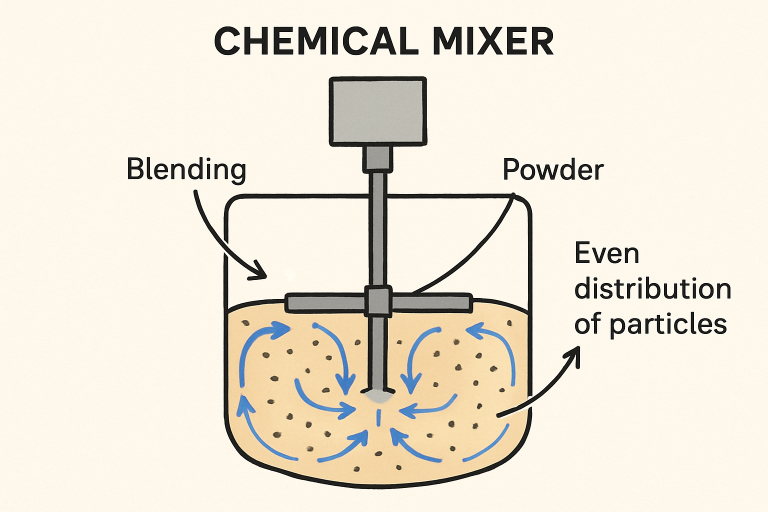
Achieving consistent quality in powdered chemicals is a top priority for industries ranging from pharmaceuticals and nutraceuticals to food production and advanced manufacturing. Uniformity of the powder mixture not only ensures efficacy and safety but also enhances overall product performance. Central to this process are chemical mixers, which perform the critical blending action to reduce ingredients to their finest particles, promoting homogeneity and process reliability.
Different chemical powders require different mixing approaches, depending on particle size, density, and reactivity. The science that drives adequate mixing involves controlling process parameters and understanding the interaction between materials and mixer technology. Failure to achieve optimal consistency can lead to dosage irregularities, reduced shelf life, and diminished product quality, underscoring the importance of reliable mixing.
Chemical powder consistency is especially vital in the pharmaceutical, food, and specialty chemical sectors, where variances can affect everything from active ingredient distribution to color uniformity and taste. Given these challenges, manufacturers continually assess their blending strategies, leveraging both historical knowledge and advancements in mixer science to secure reliable outcomes.
Significant improvements in blending technology now allow companies to scale mixing from laboratory benches to industrial-sized batches without sacrificing quality. Process engineers closely monitor mixer design, particle behavior, and environmental conditions to maintain control throughout production.
Types of Chemical Mixers
The choice of a chemical mixer depends heavily on the powder’s nature and the intended application. Some of the most common types include:
- High-Shear Mixers: Employing high rotational velocities, these mixers generate intense shear forces, enabling the efficient dispersal and reduction of particle size. They are commonly used for tasks that require rapid, thorough blending, such as pharmaceutical compound preparation and food emulsification.
- Static Mixers: Unlike their mechanical counterparts, static mixers blend fluids and powders via strategically arranged stationary elements. These mixers excel in continuous processes that require consistent product quality.
- Micromixers: Designed for microfluidic and small-scale mixing, they play a key role in industries such as biotechnology and diagnostics, where minute sample volumes must be handled with precision.
Factors Influencing Powder Consistency
Production efficiency and product quality are greatly impacted by several factors influencing powder consistency during mixing:
- Particle Size and Distribution: Consistent particle size facilitates even blending, while variations in size can lead to uneven segregation and compromised product integrity.
- Moisture Content: Elevated moisture introduces cohesion between particles, causing clumping—also known as agglomeration—which disrupts uniformity.
- Mixing Time and Speed: Under-mixing may leave pockets of unmixed ingredients, while overmixing risks degrading fragile compounds or causing unwanted chemical changes.
Challenges in Achieving Uniform Powder Mixing
Several inherent challenges can impede the goal of homogeneity:
- Segregation: Post-mixing separation due to differences in particle properties can lead to batch inconsistencies, causing critical quality deviations.
- Agglomeration: Especially problematic with fine powders, agglomeration occurs when particles stick together due to moisture, static, or other forces, creating lumps that are difficult to break apart.
- Flowability Issues: Powders with poor flowability are challenging to handle, resulting in uneven feed rates and inefficient mixing cycles.
Innovations in Mixing Technology
Addressing these challenges, the industry has witnessed breakthroughs that are reshaping mixing operations. Artificial intelligence is now being used to model and predict powder-mixing behavior, significantly expediting research and process validation. An example is the use of AI to simulate powder blending up to 350 times faster than traditional means while maintaining predictive accuracy. Additionally, researchers are investigating elastic instabilities.
Best Practices for Optimal Mixing
Manufacturers looking to secure the highest level of powder consistency adopt several best practices:
- Understand Material Properties: Assess particle shape, size distribution, and moisture sensitivity at the outset to select the right equipment and prevent issues later in production.
- Control Environmental Conditions: Monitor and regulate production-area humidity and temperature to prevent agglomeration and static buildup.
- Regular Equipment Maintenance: Consistent cleaning and upkeep prevent contamination and mechanical breakdowns, ensuring reliability and extending the lifespan of mixers.
- Implement Quality Control Measures: Periodic batch testing for uniformity and quality enables timely adjustments to processing parameters and ensures product standards are met.
Conclusion
The pursuit of consistent chemical powder mixing is a foundational aspect of modern industry. A nuanced understanding of powder properties, mixer technology, and process conditions is vital for achieving high-quality results. Embracing technological innovations and refining traditional methods through careful control and continual monitoring remain key to surpassing industry standards. By harnessing both established and cutting-edge practices, manufacturers are better equipped to deliver products that meet the most stringent requirements for uniformity, performance, and safety.